Basement Dig-Downs in Chicago
What Homeowners and Investors Should Know Before Lowering a BasementA basement dig-down, also called basement excavation, is one of the most complex residential renovations performed in Chicago. The process involves excavating below an existing basement floor to increase ceiling height and create usable living space.
While this renovation can dramatically expand square footage, it requires extensive structural engineering, permitting, and construction coordination.
Why Basement Dig-Downs Are Common in Chicago
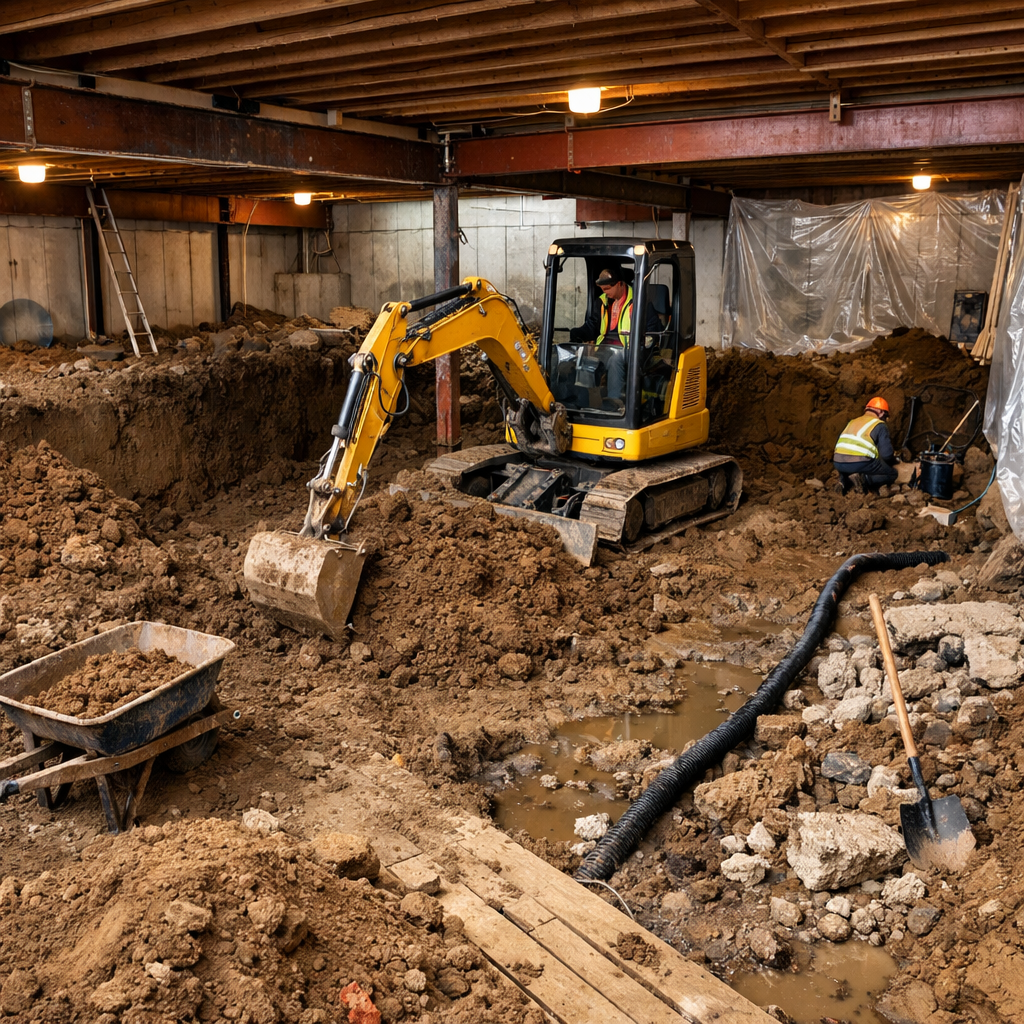
Many older Chicago homes have basement ceiling heights of only 6 to 6.5 feet, making the space difficult to use as a living area. By lowering the basement floor, homeowners can transform cramped storage areas into comfortable living space. Common motivations include:
- Adding livable square footage without expanding the home footprint
- Converting basements into rental units or guest space
- Improving property value in high-demand neighborhoods
- Maximizing landlocked properties where additions are not possible
Recent updates to Chicago’s building code reduced minimum ceiling height requirements for habitable spaces to 7 feet, making basement conversions more feasible.
Understanding Basement Floor Lowering vs Underpinning
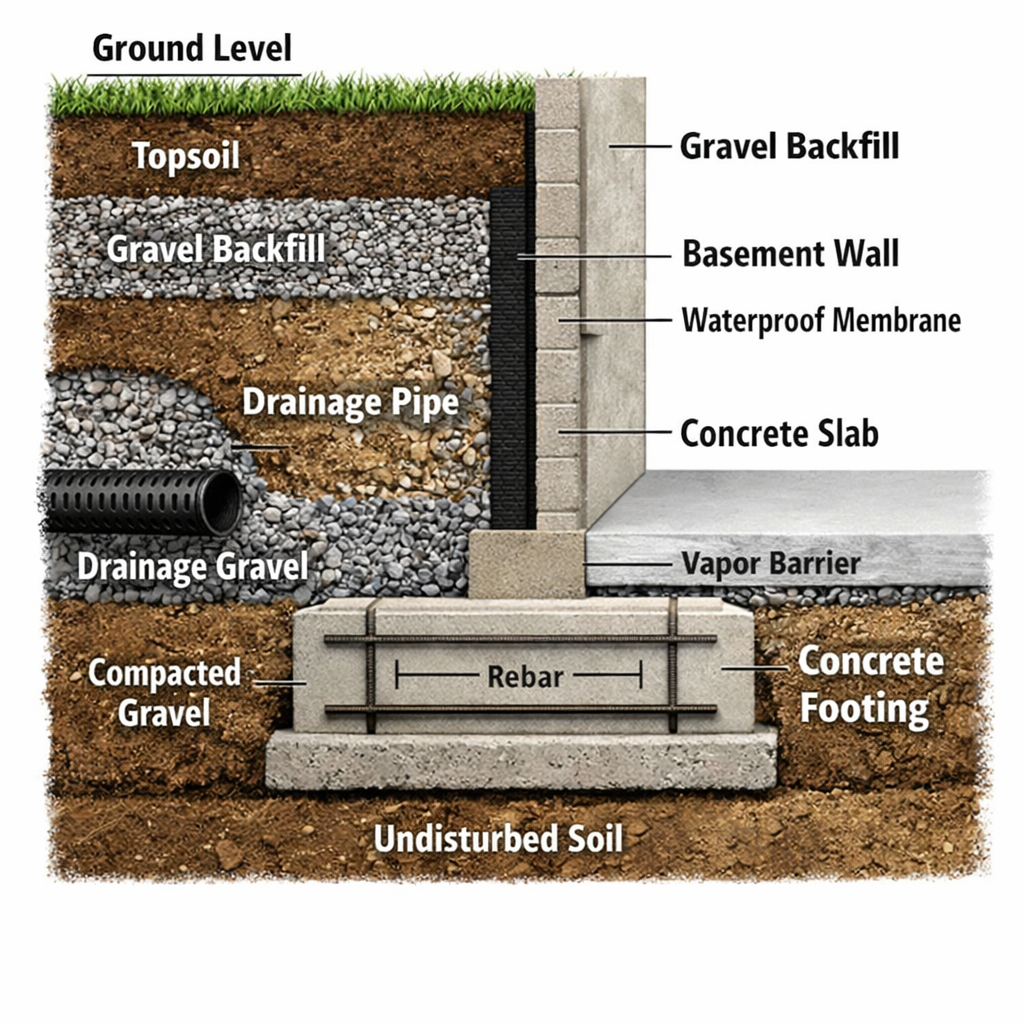
A common misconception is that all basement dig-down projects require underpinning (see below for an explanation of underpinning). In reality, that is not always the case. Every home sits on a foundation footing, which supports the structural load of the building. The relationship between the basement floor and the footing determines whether underpinning is required. There are generally two scenarios:
Lowering to the Top of the Existing Footing
In many homes, the basement floor can be lowered down to the top of the existing footing without affecting the structural support of the foundation. In this scenario:
- The existing basement slab is removed
- Soil is excavated down to the footing elevation
- A new concrete slab is installed at the lower level
Because the footing itself is not disturbed, underpinning is typically not required.
Lowering Below the Existing Footing
If additional ceiling height is desired beyond the top of the footing, the foundation must be structurally reinforced. This is where underpinning becomes necessary. Underpinning extends the existing foundation deeper so that excavation below the original footing does not compromise structural support.
The Underpinning Process
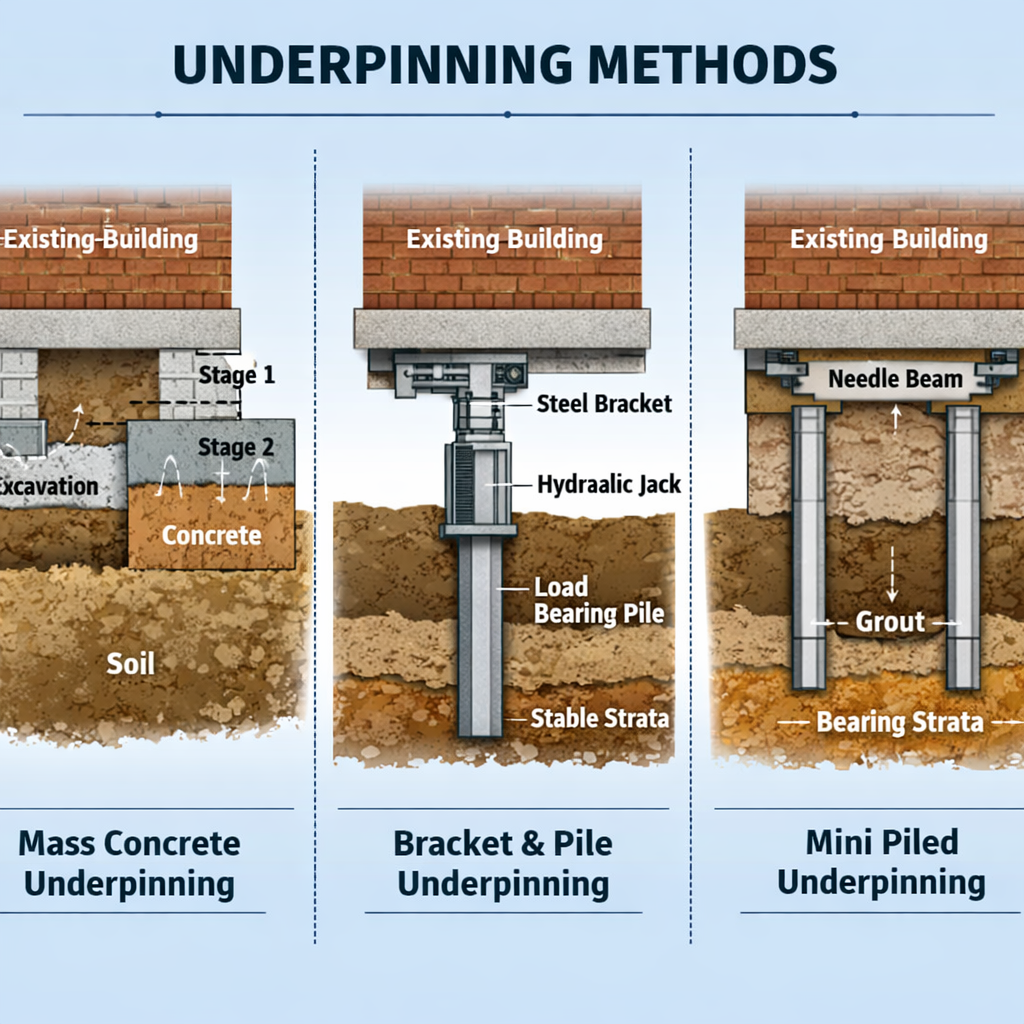
When underpinning is required, construction is performed in carefully controlled phases. The process typically involves:
- Structural engineering analysis
- Soil evaluation
- Excavating small sections beneath the existing footing
- Pouring new reinforced concrete footings below the original foundation
- Repeating the process sequentially around the basement perimeter
This staged approach ensures that the building remains structurally supported throughout construction. Because many Chicago homes share party walls with adjacent properties, engineers must also evaluate neighboring foundations before construction begins.
Major Construction Stages
A typical dig-down project includes:
- Planning and engineering
- Permit approval
- Phased excavation
- Foundation underpinning
- Waterproofing and drainage installation
- New concrete slab installation
- Interior finishing work
The underpinning process alone can take 2–4 weeks, while finishing work may extend the overall schedule by several months.
Typical Costs
Basement dig-downs are among the most expensive residential renovation projects.
Typical ranges include:
- $60,000–$200,000+ for a full dig-down
- $50–$150 per square foot for completed basement conversions
Cost drivers include:
- Engineering and structural design
- Excavation complexity
- Waterproofing systems
- Plumbing and electrical installation
- Interior finishing
Because excavation itself represents only a portion of total costs, most of the budget is associated with structural reinforcement and finishing.
Timeline Expectations
Most basement dig-down projects follow a multi-stage timeline:
- Planning and engineering: 2–4 weeks
- Permit approval: 4–8 weeks
- Underpinning and excavation: 2–4 weeks
- Waterproofing and slab installation: 1–2 weeks
- Interior finishing: 4–12 weeks
Total project duration typically ranges from 4–8 months, depending on complexity and weather conditions.
Key Risks and Limitations
Dig-downs are not feasible for every property. Potential limitations include:
- High groundwater levels
- Unstable soil conditions
- Structural limitations of existing foundations
- Risks to adjacent buildings in row houses or properties with small gangways like most of Chicago
Geotechnical testing and structural engineering assessments are essential before committing to the project.
Key Takeaways
- Basement dig-downs add usable square footage without expanding the footprint
- Structural underpinning is required to protect the foundation
- Projects involve extensive engineering and permitting
- Costs can exceed $200,000 depending on complexity
- Proper planning is essential to ensure the renovation supports property value
When appropriate for the property and neighborhood, a basement dig-down can dramatically improve both livability and long-term real estate value.