Condo Renovations in Chicago
What Homeowners and Investors Should Know Before RemodelingRenovating a condo in Chicago can significantly improve both lifestyle and property value. For homeowners, it can modernize an outdated unit and improve daily comfort. For investors, it can increase resale value or support stronger rental income in a competitive market.
Condo renovations, however, are fundamentally different from single-family home projects. Shared walls, association rules, elevator logistics, and city permitting requirements add complexity that must be understood before construction begins.
This guide walks through the key considerations for homeowners and investors planning a condo renovation in Chicago.
Chicago’s Condo Market: Opportunity Within Constraints

Chicago’s condo inventory ranges from vintage courtyard buildings and brick three-flats to modern high-rises and mid-rise developments. Each building type comes with different structural systems, mechanical configurations, and association governance.
Renovating a condo can:
- Increase resale value
- Improve rental competitiveness
- Modernize outdated finishes
- Enhance functionality in smaller spaces
- Improve energy efficiency
Kitchen and bathroom updates typically deliver the strongest value impact. Thoughtful layout adjustments, lighting upgrades, and built-in storage also significantly influence buyer and renter perception.
Why Condo Renovations Are More Complex
Unlike single-family homes, condo renovations require coordination beyond just the contractor and owner.
1. Condo Association Requirements
Most Chicago condo associations require:
- Board approval prior to construction
- Detailed scope of work submission
- Contractor insurance documentation
- Signed construction agreements
- Refundable security deposits
Associations often restrict:
- Construction hours
- Elevator usage
- Material deliveries
- Use of common hallways
- Weekend work
These limitations directly affect project scheduling and cost.
2. City Permits and Regulatory Oversight
Projects involving plumbing, electrical, HVAC, or structural changes typically require permits through the City of Chicago.
Depending on scope, permits may involve review by:
- Department of Buildings
- Department of Water Management
Opening walls, relocating plumbing, or modifying load-bearing elements extends both timeline and cost. Failing to secure proper permits can create major complications during resale.
Early coordination between contractor, architect, and association reduces delays.
3. Space Limitations and Structural Constraints

Many Chicago condos, especially in older buildings, present unique challenges:
- Tight layouts
- Structural walls that cannot be removed
- Shared plumbing stacks
- Limited electrical panel capacity
- Limited storage
Removing a wall may not be possible without structural engineering. Relocating plumbing may not be feasible due to shared vertical stacks.
In these cases, smart design solutions often outperform aggressive demolition.
How to Strategically Plan a Condo Renovation
Assess Market Expectations
Homeowners should consider how the renovation improves daily life.
Investors should evaluate:
- Comparable sales within the building
- Renovation level of competing units
- Rent premiums for updated properties
- Buyer expectations in the neighborhood
Kitchen modernization, bathroom upgrades, flooring replacement, and improved lighting consistently influence perceived value.
Understand Association Rules Early
Before finalizing plans:
- Review bylaws and renovation guidelines
- Confirm approval timeline
- Identify required documentation
- Clarify deposits and administrative fees
Waiting until permits are ready can delay projects by weeks or months.
Establish a Realistic Budget
Condo renovation budgets should account for:
- Labor and materials
- Permit fees
- Association review fees
- Elevator reservations
- Insurance requirements
- Contingency reserves
Older buildings often reveal surprises once walls are opened. A contingency reserve protects against disruption.
Typical Condo Renovation Costs in Chicago
While every project is unique, general ranges include:
- Minor cosmetic updates: $10,000–$30,000
- Kitchen remodel: $25,000–$70,000
- Bathroom remodel: $15,000–$40,000
- Full condo renovation: $60,000–$150,000+
Cost drivers include:
- Unit size
- Structural modifications
- Plumbing relocation
- Electrical upgrades
- Finish level
- Association requirements
High-end finishes such as custom cabinetry, premium stone, and specialty lighting significantly increase cost. Structural or plumbing changes often represent the largest budget impact.
Managing Timeline Expectations
Condo renovations typically require more coordination than single-family projects.
Common timeline factors include:
- Board approval review
- Permit processing
- Restricted construction hours
- Elevator scheduling
- Delivery coordination
Proactive scheduling and clear scope definition help maintain momentum.
Common Challenges in Chicago Condo Renovations
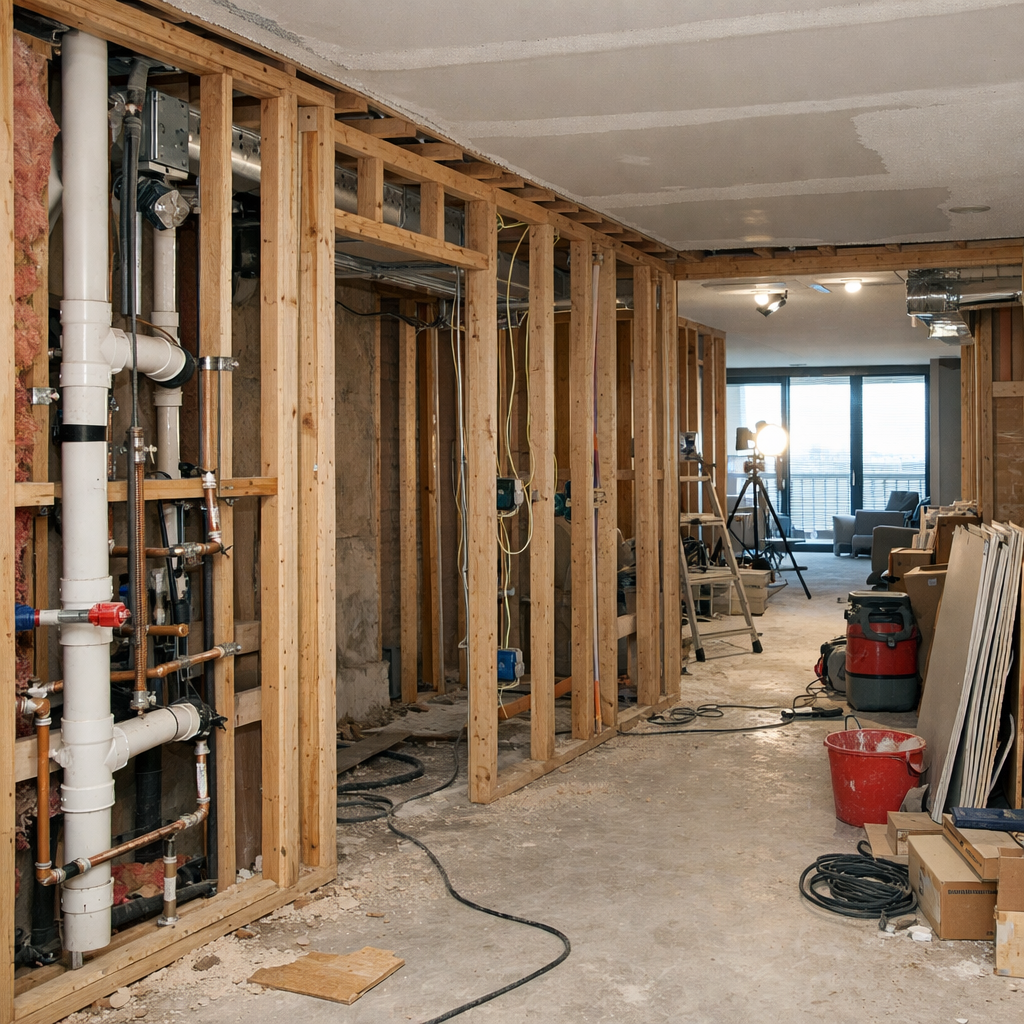
Older Chicago condo buildings frequently present:
- Outdated electrical systems
- Plumbing limitations
- Sound transmission concerns
- Fire-rated assembly requirements
- Neighbor sensitivity to noise
- Code compliance updates
Experienced project planning anticipates these variables and incorporates flexibility into schedule and budget.
Key Takeaways for Homeowners and Investors
- Condo renovations require both association and city approval
- Kitchen and bathroom updates typically produce the strongest value
- Structural and plumbing limitations may restrict layout changes
- Association rules influence both timeline and cost
- Contingency planning is essential
- Clear scope definition protects budget control
A successful condo renovation is less about dramatic transformation and more about disciplined coordination, thoughtful design, and careful compliance.