



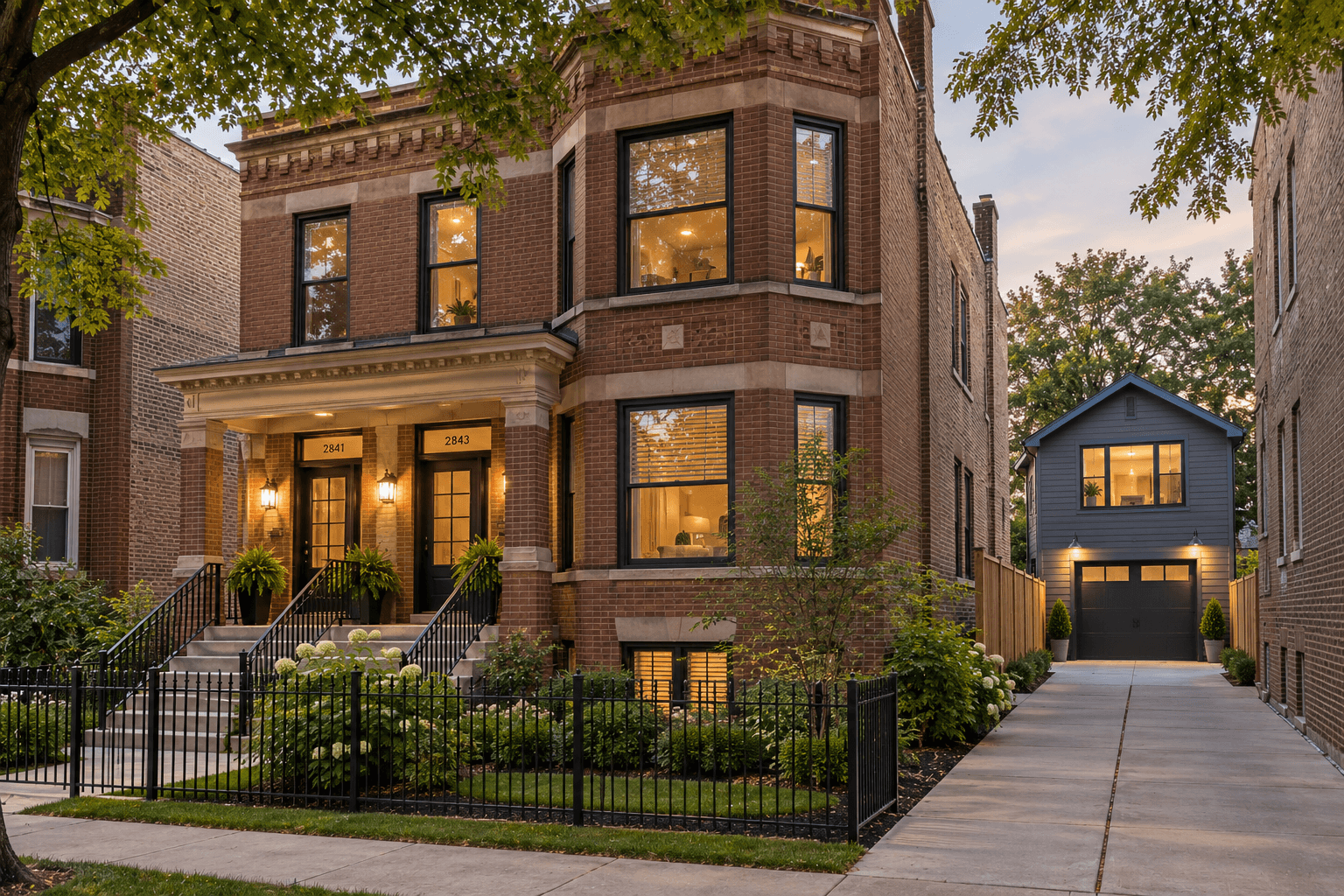
Whether you're looking to create rental income, make room for family, or increase the long-term value of your property, adding a second living space is one of the most common renovation queries we hear from Chicago property owners.
In many cases, the decision comes down to two options:
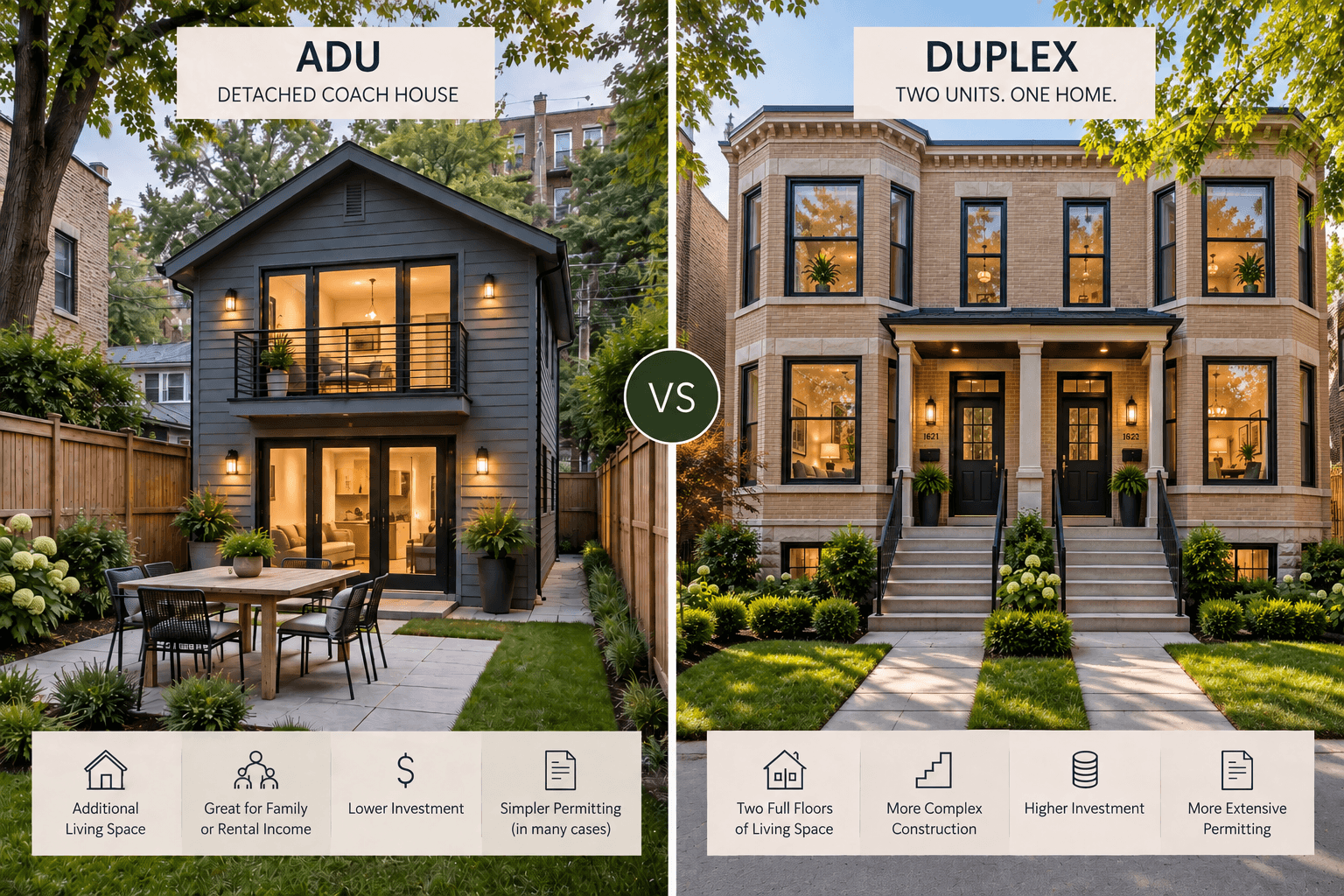
- Accessory Dwelling Unit (ADU): ADUs in Chicago can refer to a detached coach house or an attached addition.
- Duplex: A duplex in Chicago is a condo or apartment often separated by a floor. You will usually read about “duplex-down” or “duplex-up” in Chicago.
Both an ADU and duplex allow you to create additional housing space. The exact choice depends on the layout, lot size, available space, and zoning requirements.
ADU vs. Duplex: Understanding the Difference
Although both options create additional living space, they do so in very different ways.
What Is an ADU?
An Accessory Dwelling Unit (ADU) is a secondary residential unit located on the same property as the primary home. In Chicago, this takes one of two forms:
- A detached coach house
- An attached basement or attic conversion
ADUs are often chosen by homeowners who want space for family members, aging parents, adult children, or long-term rental income while maintaining the existing home.
What Is a Duplex Conversion?
A duplex is a single principal building that spans two floors stacked on top of each other. The residence is divided into two fully contained living spaces, including separate kitchens, bathrooms and bedrooms.
Unlike an ADU, a duplex conversion typically involves more extensive permitting, structural changes, load-bearing modifications, and often staircase installation if not converting an existing two-or-more story residence..
How Zoning Affects Your Options
Before comparing costs or potential returns, it's important to understand what your property allows. Chicago's expanded ADU ordinance has made ADUs possible in many areas of the city, although eligibility still depends on the property's characteristics and current City regulations.
For many single-family properties in RS zoning districts, an ADU may be the most practical way to create a second legal living space. Duplex conversions are allowed in single-family zones provided you don’t exceed limits on total buildable square footage.
What Does an ADU Cost?
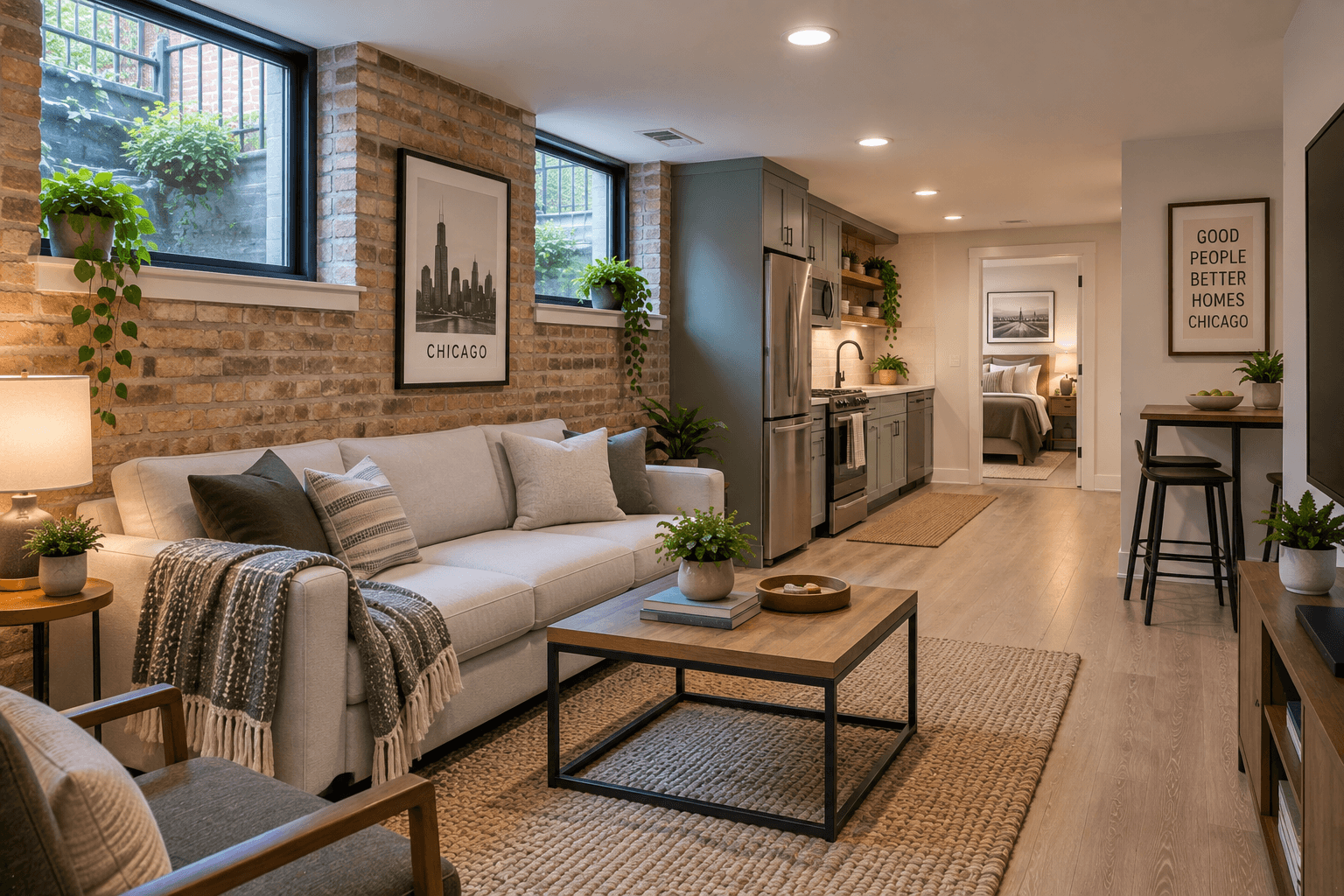
Basement ADUs are typically the more affordable and accessible option.
Typical construction costs include:
- Detached coach house: $150,000-$350,000
- Basement conversion: $85,000-$150,000
If you're converting an existing basement into a legal dwelling unit, additional work may be required to meet current building codes. Common improvements include:
- Egress windows
- Ceiling height modifications
- Fire separation
- Utility separation
If you are building a detached coach house, you must consider:
- The foundation
- Height and setback limits
- Parking restrictions if applicable to your area
- Separate utility meters
Depending on the existing conditions, these upgrades can add $20,000-$80,000 to the project. Separating utilities may add another $5,000-$20,000. Here is a detailed cost breakdown on the legal aspects of basement conversion in Chicago.
Typical Timeline
While every project is different, most ADU projects follow a timeline similar to:
- Planning and design: 2-4 months
- Permitting: 2-6 months
- Construction: 3-6 months
Existing conditions, permit review, and design complexity can all affect the overall schedule.
What Rental Income Can an ADU Generate?
Rental rates vary throughout Chicago, but many legal ADUs rent for approximately $1,450-$2,600 per month, depending on location, size, and finishes.
Example ADU Return
- Investment: $150,000
- Monthly Rent: $1,800
- Annual Gross Rent: $21,600
- Estimated Gross ROI: 14.4%
- Estimated Net ROI: 5-7%
- Typical Payback Period: 8-15 years
Although ADUs can add meaningful value to a property, they are often still appraised primarily as part of a single-family residence. Many homeowners, however, find the combination of rental income and increased property value makes the investment worthwhile over the long term.
It's also important to understand that Chicago places restrictions on using ADUs as short-term rentals. If your goal is Airbnb or similar short-term occupancy, be sure to review the City's current regulations before planning your project.
What Does a Duplex Conversion Cost?
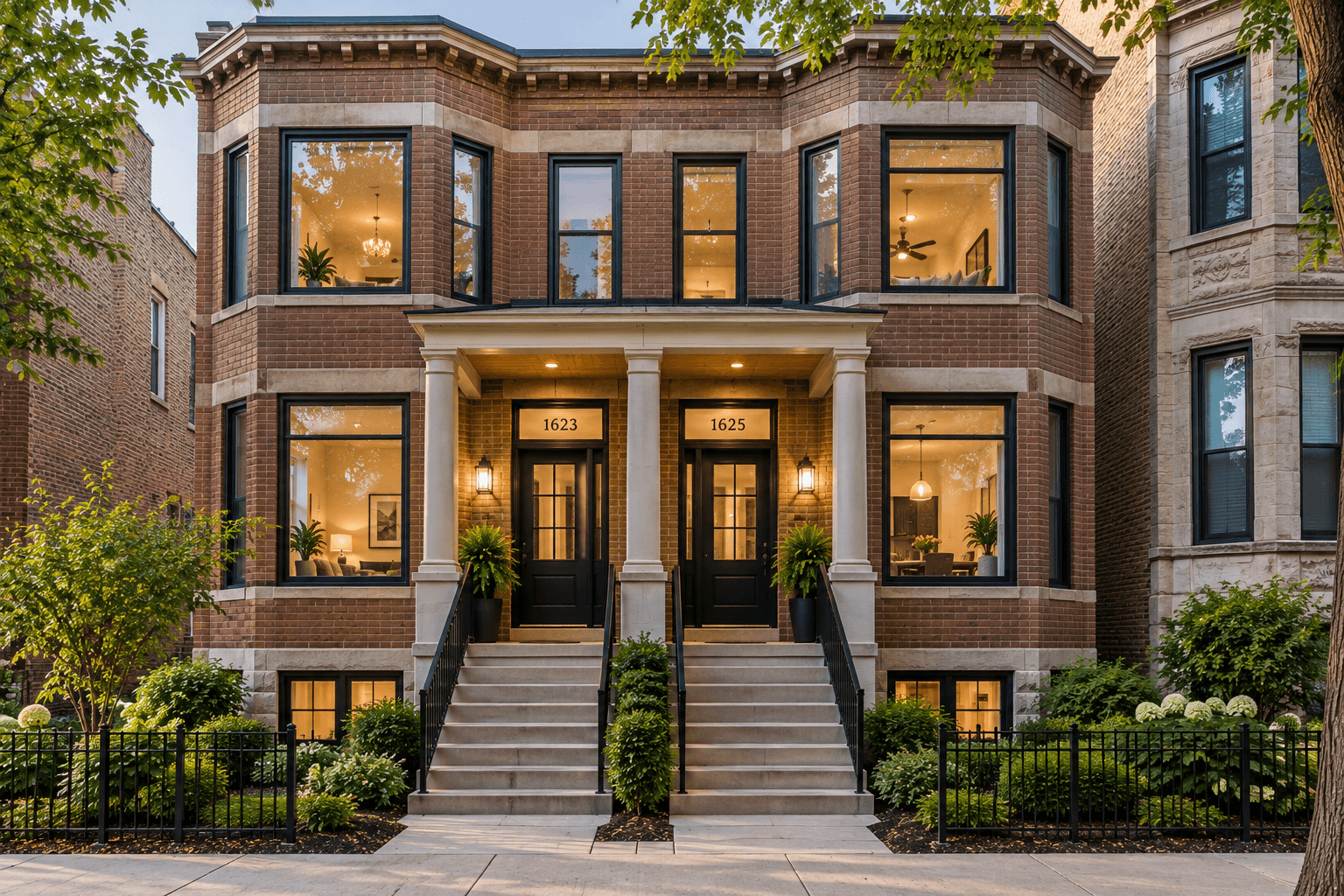
A duplex conversion generally requires a larger investment because it often involves significant structural work, additional building systems, and more extensive permitting.
Typical project costs range from $250,000 to $600,000+, depending on the property's condition, design, and scope of work. If the property has an existing mortgage, your lender may also need to approve certain aspects of the project before construction begins.
Typical Timeline
Duplex conversions generally take longer because they often involve structural work, additional permitting, and more complex inspections.
A typical timeline includes:
- Planning and design: 2-4 months
- Permitting: 3-8 months
- Construction: 6-12 months or longer
Projects requiring zoning approvals or significant structural modifications can extend beyond these estimates.
What Rental Income Can a Duplex Generate?
Unlike ADUs, duplexes in Chicago are not considered separate units. That means you might see a small increase in rental values. Most families build duplexes for a better living experience and increased living space.
ADUs Vs. Duplexes in Chicago: Comparison
|
Consideration |
ADU |
Duplex |
|
Upfront Investment |
Lower |
Higher |
|
Construction Complexity |
Lower |
Higher |
|
Construction Timeline |
Shorter |
Longer |
|
Permitting Complexity |
Lower |
Higher |
|
Rental Income Potential |
Moderate |
Low |
|
Long-Term Appreciation |
Good |
Moderate |
|
Best For |
Homeowners, First-time Investors |
Homeowners |
Which One Fits Your Goals?
An ADU may be the better choice if you:
- Want to create rental income with a lower upfront investment
- Need flexible living space for family members, caregivers, or long-term tenants
- Own a single-family property where a duplex isn't permitted
- Prefer a simpler construction and permitting process
A duplex conversion may be the better choice if you:
- Want to expand on a single unit
- Want to renovate an older house for better livability
- Have the budget for a more complex project
- View the property primarily as a long-term investment
Final Thoughts
There isn't a single right answer for every property.
For many Chicago homeowners, an ADU provides an affordable way to add living space, generate rental income, or accommodate family members. For homeowners with the right property and budget, a duplex conversion may offer a better lifestyle.
Before moving forward with either option, it's worth understanding what your zoning allows, what permitting requirements apply, and how the project fits your financial goals. Taking the time to evaluate these factors early can help you choose the option that best fits your property, your budget, and your long-term goals.
About Quality Builders
Quality Builders specializes in residential renovations throughout the Chicago area, helping homeowners and real estate investors navigate everything from planning and permitting to construction and project completion. Whether you're considering an ADU, duplex conversion, basement renovation, home addition, or whole-home remodel, our team focuses on practical solutions that align with your property, budget, and long-term goals.
If you're exploring ways to maximize your property's potential, we're happy to discuss your options and help you understand what's possible before construction begins.